









About the Writers Guild of America
In 2006, the Writers Guild of America, the labor union that represents screenwriters in the United States, decided to assemble a canon. The gesture has something almost archaeological about it: choosing, from nearly a century of narrative cinema, which screenplays should be carried into the future as essential references. The result was a list that not only celebrates foundational works but also highlights the power of writing as the backbone of filmmaking.
The list has a charming historical quality because it captures the writers’ own perspective on their craft. It is less concerned with the glamour of directing and more focused on structure, dialogue, dramatic shape, and formal invention. Today, almost twenty years later, it remains a snapshot of its era and also a vivid reminder of what allows a story to endure.
Below, we revisit the top ten and look at what each screenplay offers in terms of invention, risk, and impact, and why each one remains a milestone.
Top 10 Screenplays
Casablanca (1942) screenplay by Julius J. Epstein, Philip G. Epstein and Howard Koch
Based on the play Everybody Comes to Rick’s by Murray Burnett and Joan Alison, the screenplay for Casablanca emerged during World War II, with rewrites happening throughout production and a sense of creative chaos that has since become legendary. The Epstein brothers and Howard Koch turned a war melodrama into an enduring classic that balances romance, political intrigue, and sharp humor with precision.
The screenplay is revered for its unforgettable lines such as “Here’s looking at you, kid…” and for its carefully calibrated emotional structure. Rick and Ilsa are not just a couple torn apart by circumstance. They embody the struggle between personal desire and historical responsibility. The plot seems simple, but every scene pushes the characters toward increasingly difficult choices. It is essentially the definitive guide to crafting a perfect bittersweet ending.

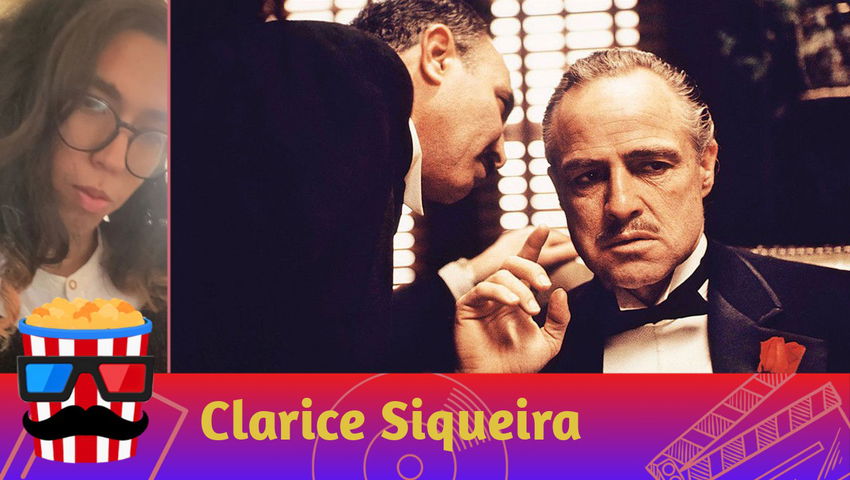
The Godfather (1972) screenplay by Mario Puzo and Francis Ford Coppola
Adapted from Mario Puzo’s bestselling novel, the screenplay for The Godfather condenses a dense web of plots, subplots, and mafia lore into an intimate epic about family, power, and loyalty. Puzo and Coppola present the mafia as a tragic dynasty in which organized crime is intertwined with ideas of family business and rigid codes of honor.
The power of the script lies in Michael Corleone’s transformation. He begins as the “good son” and ends as his father’s relentless successor. Everything unfolds step by step, with no forced leaps. Family gatherings, negotiations, and the famous sequence that intercuts the murders with the baptism all work together. It is a screenplay that demonstrates how structure and theme can reinforce each other, since every narrative choice strengthens the central question about the true cost of power.

Chinatown (1974) screenplay by Robert Towne
A sunlit noir, Chinatown is the kind of screenplay that people call “perfect” without hesitation. Robert Towne constructs an investigation that begins with a simple adultery case and expands into corruption, environmental crime, @@@@, abuse of power, and an entire city built on hidden truths.
The script is a masterclass in investigative structure. Every red herring is compelling, every line of dialogue reveals more than it seems to, and the ending is devastating without feeling gratuitous. The line “Forget it, Jake, it’s Chinatown” serves as a diagnosis of a world where justice never fully arrives. It is a screenplay unafraid of bleakness, and for that reason it still feels strikingly modern.

Citizen Kane (1941) screenplay by Herman J. Mankiewicz and Orson Welles
Citizen Kane is the moment when cinema looks at itself and asks, “What if we turned everything inside out?” Mankiewicz and Welles tell the story of Charles Foster Kane through fragments, testimonies, and conflicting memories, creating a puzzle-like narrative in which “Rosebud” functions less as an answer and more as a provocation.
The screenplay is revolutionary in the way it plays with time, perspective, and unreliable narration. There is no single truth about Kane, only pieces seen by different observers. This formal approach opened the door to nonlinear storytelling, morally complex protagonists, and structures that require the audience to engage actively. It remains the definitive reference for any film that aims to portray an entire life as both legend and autopsy.

All About Eve (1950) screenplay by Joseph L. Mankiewicz
Written and directed by Joseph L. Mankiewicz, All About Eve is based on Mary Orr’s story “The Wisdom of Eve” and offers a brilliant dissection of theater, fame, and the aging of women in show business. Margo Channing (Bette Davis), a seasoned Broadway diva, finds her life overtaken by Eve Harrington, a seemingly harmless fan who carefully engineers an unstoppable rise.
The screenplay is filled with sharp dialogue and incisive commentary on ambition, decorative masculinity, and the female rivalry shaped by the industry. It balances spectacle and cruelty with almost surgical precision. It is a masterclass in creating high-voltage character drama, with conflicts that feel both professional and deeply personal. The most memorable acts of cruelty here are not shouted, but delivered with a smile and a drink.

Annie Hall (1977) screenplay by Woody Allen & Marshall Brickman
The structure of Annie Hall feels casual yet is tightly controlled. Allen and Brickman use flashbacks, fourth wall breaks, playful fantasy inserts, and first-person narration to explore the end of a romantic relationship. Alvy Singer tries to understand why his story with Annie fell apart, and the script presents this attempt at emotional self-examination as a kind of collage.
The film is a landmark in the auteur romantic comedy. Neurosis, humor, intellect, and vulnerability coexist throughout. Everyday situations become emotional battlegrounds without losing charm. The screenplay shows that a love story can be sincere, funny, and bitter at the same time without needing a neatly reconciled ending. And along the way, it redefined the idea of the “odd but iconic couple.”

Sunset Blvd. (1950) screenplay by Charles Brackett, Billy Wilder & D. M. Marshman Jr.
In Sunset Blvd., Brackett, Wilder, and Marshman Jr. craft a gothic Hollywood tale told from the point of view of a dead screenwriter. Joe Gillis, the cynical narrator who is already deceased, guides us through the decaying mansion of Norma Desmond, a silent-film star who refuses to accept that her time has passed.
The screenplay is a fierce exploration of fame, industry, and obsolescence. Opening the story with the protagonist’s body floating in a pool immediately sets its biting tone. The mix of noir, dark humor, and melodrama creates a distinctive texture. It is a film about cinema that spares no part of the system itself. The writing balances irony with compassion for characters trapped in a machine that only knows how to grind people down and move on.

Network (1976) screenplay by Paddy Chayefsky
Written by Paddy Chayefsky, Network is essentially a prophetic outburst shaped into a screenplay. The story follows Howard Beale, a news anchor in crisis who is not taken off the air but turned into a product instead. His collapse becomes television spectacle, ratings, and profit.
The script is an explosive example of political and media satire. Beale’s speeches (“I’m mad as hell…”) are furious, theatrical, and frighteningly current. They anticipate the logic of shock-driven, outrage-powered television. Chayefsky writes dialogue that feels almost operatic, full of monologues and verbal clashes that seem exaggerated until you turn on the TV today and realize he was describing what was coming.

Some Like It Hot (1959) screenplay by Billy Wilder & I. A. L. Diamond
Wilder and I. A. L. Diamond take a gangster tale involving disguises, adapted from a 1930s French film, and turn it into one of the most celebrated comedies of all time. Two musicians witness a crime and, to escape the mob, infiltrate an all-female band while disguised as women, joined by a brilliantly charismatic Marilyn Monroe.
The screenplay is a lesson in comic timing and escalating situations. Every lie leads to another, every disguise creates a new complication, and layers of desire, attraction, and identity build up until the famous “Nobody’s perfect” finale. The writing is sharp enough to play with gender, desire, and performance while keeping the tone light, which is one of the reasons the film remains relevant decades later.

The Godfather Part II (1974) screenplay by Francis Ford Coppola & Mario Puzo
In The Godfather Part II, Coppola and Puzo accomplish something rare: a sequel that works as both a continuation and a prequel. As we follow Michael Corleone, now firmly established as Don, the narrative returns to the past to explore Vito’s youth, immigration, and rise in the underworld.
The writing creates a painful mirror. The father builds the family, while the son tears it apart. The parallel editing between these two paths makes the screenplay feel like a blend of historical fiction and psychological study. The film expands the universe of the original without repeating it and deepens themes of power, guilt, and identity. It also introduced the “Part II” model that would dominate Hollywood in the decades ahead, to the studios’ delight and later to Coppola’s regret.

Conclusions
The WGA’s 2006 list is similar to those old compilations you might find in someone’s home. It includes debatable choices, absolute classics, films that marked their era, and others we now revisit with a different perspective. That is exactly what makes it so interesting. It reveals what was considered essential almost two decades ago and shows how our relationship with these stories changes over time.
Between impossible romances, institutional corruption, Hollywood consuming its own children, family-run mafias, and fierce media satire, these ten screenplays remain worth revisiting because they helped shape much of the cinema and pop culture we enjoy today. Not because they are untouchable, but because they left lasting marks: memorable lines, scenes that became reference points, characters who entered the collective imagination whether we wanted them to or not.
In the end, this list does not tell you what you must love. It simply reminds us of one thing:
good stories keep the conversation going. Sometimes they enchant, sometimes they unsettle. And that is exactly what keeps cinema alive.





 Connectez-vous et rejoignez la conversation
— commentaires 0
, Réactions 1
Soyez le premier à commenter