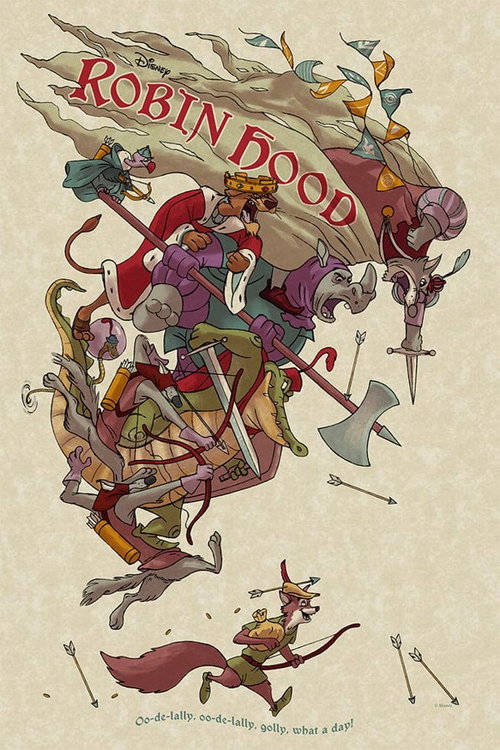


Robin Hood is the legendary English outlaw whose surviving stories have changed markedly across more than six centuries. The earliest substantial texts do not present him as a nobleman returning from the Crusades. Instead, the fifteenth-century ballad A Gest of Robyn Hode depicts him as a yeoman living in Barnsdale, a woodland area in Yorkshire. He keeps a band of followers, including Little John, Much the miller’s son, and Will Scarlet, and he insists that his men should not harm husbandmen, yeomen, or “good” knights, while treating bishops and certain wealthy churchmen as legitimate targets. In the Gest, Robin assists a financially ruined knight, Sir Richard at the Lee, by lending him money so he can redeem his lands from the Abbot of St Mary’s in York. Robin later helps the knight resist the sheriff and the abbot. The story also includes Robin’s capture by the Sheriff of Nottingham after a shooting contest. Little John rescues him with the help of the knight, and Robin retaliates by killing the sheriff. This medieval Robin is not yet chiefly defined by distributing money to the poor; that familiar formula became more prominent in later retellings. The Sheriff of Nottingham is Robin’s most persistent adversary, though the character’s exact role differs by version. In the Gest, Robin eventually enters the service of a king called Edward, usually understood within the tale as Edward II, after the king disguises himself and visits the forest. Robin remains at court for a short time before returning to the greenwood. Other early ballads add episodes such as Little John’s service to the sheriff and Robin’s encounter with a potter. Maid Marian and Friar Tuck were not original members of Robin’s early outlaw band. Marian developed from May-game and pastoral traditions, while Tuck appears in separate festive material before being absorbed into Robin Hood stories. By the sixteenth century, both were regularly associated with him. Robin’s social rank also rose over time. Anthony Munday’s late sixteenth-century plays made him Robert, Earl of Huntingdon, a dispossessed aristocrat. Later writers frequently linked him to King Richard I, Prince John, and the Crusades, although these elements are absent from the earliest major ballads. The legend is strongly associated with Sherwood Forest in Nottinghamshire, yet Barnsdale has equal importance in early texts. Claims that Robin was a real individual have never been conclusively verified. Medieval records contain several men named Robehod or similar forms, but the name could also function as a label for an outlaw. Robin Hood therefore endures less as a securely identifiable historical person than as a layered literary figure: a forest outlaw repeatedly refashioned by ballads, plays, novels, films, and popular memory.


Reaktionen
0
0 Kommentare
Sei der erste der kommentiert